Afterworlds
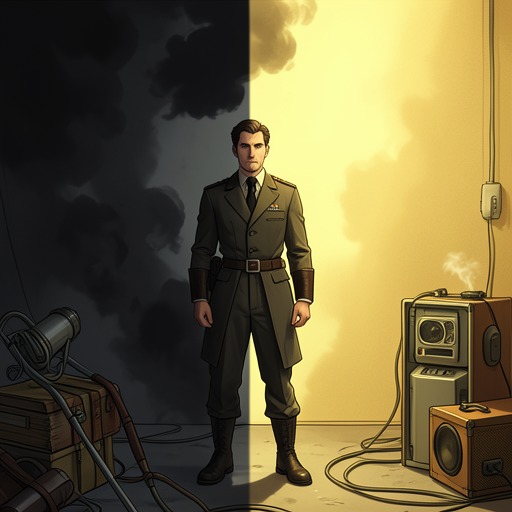
Thus Spoke ZarathustraAfterworlds are imagined realms beyond human life and the earth, but Zarathustra presents them not as truths disclosed from beyond: they are creations of human beings in pain. In “Of the Afterworldsmen,” he recalls having once projected his hopes beyond mankind himself, then describes how suffering and bodily despair generated those visions. His account turns the supposed escape from earthly existence into evidence of its human source, and makes recovery mean learning to affirm and shape life here.
The belief Zarathustra once shared
Zarathustra begins by placing himself among those he criticizes. He too once cast his imagination beyond mankind, and the world seemed to him the work, dream, or fiction of a suffering God. In that former outlook, earthly life could appear as an imperfect image produced by a creator’s discontent; the beyond promised a way to look away from pain and forget oneself. Zarathustra does not present this belief as an alien error that he had always recognized. It belonged to his own history, which gives his argument the character of a change undergone rather than a judgment delivered from outside.
That change is described as self-overcoming. Zarathustra says that, as a sufferer, he overcame himself, carried his ashes into the mountains, and made a brighter flame; the phantom of the beyond then fled. The image connects his altered understanding to a transformation in himself: the imagined other world had seemed compelling while he suffered, but, after this change, believing in such phantoms would itself be a form of suffering and humiliation. His criticism therefore rests on an account of how the belief arises and on a contrast between his earlier condition and his recovery.
Suffering, the body, and imagined escape
The lecture traces Afterworlds to suffering and impotence, including the brief, intense happiness that may come to a person in great suffering. It also identifies a more exhausted impulse: weariness that wants to reach an ultimate end in one leap and no longer wants to want. In this account, belief in another world is not evidence that human beings have discovered a realm beyond life. It expresses the desire to be done with the conditions that make earthly existence painful or difficult to bear.
Zarathustra locates that desire in the body itself. The body, despairing of the body and of the earth, reaches toward what it imagines as an ultimate boundary and tries to pass beyond it. Yet the promised other world remains a “heavenly Nothing,” hidden from human beings; existence cannot speak to them except in human terms. Even the beliefs that seem most opposed to bodily life have, Zarathustra insists, taken their materials from the body and the earth. His point is not that the longing for escape is unreal as an experience, but that its supposed destination is a human construction rather than a demonstrated reality beyond humanity.
From heavenly meaning to earthly creation
Against the appeal of Afterworlds, Zarathustra presents the creating, willing, evaluating self as the clearest evidence of human existence. The Ego does not merely receive meaning from a higher realm: it measures and values, and can create meaning for the earth. This reversal matters to his teaching. What had appeared as a reason to despise earthly existence becomes, on his account, a sign of the human activity through which values are made. The task is no longer to bury one’s head in heavenly things, but to carry an earthly head freely and give meaning to the earth.
The same change alters how the path of human life is regarded. Zarathustra teaches a new will: to desire the path people have followed blindly, call it good, and cease to creep aside from it as though earthly existence were merely something sick or dying. He also connects the inventions of heaven and redemption with those who despise body and earth while depending on them for the very experiences and images that sustain their hopes. The critique thus turns on a tension: the imagined escape disowns earthly life, yet its language and power originate in earthly life.
Eternal recurrence as a test of affirmation
The book’s treatment of Eternal recurrence sharpens the contrast. In the thought experiment of the heaviest burden, a demon proposes that every detail of a person’s life return endlessly in precisely the same sequence: not only its pains and joys, but even a spider, moonlight among trees, and the present encounter. The imagined listener might recoil from the prospect or welcome it as the most divine news. The question is not answered by appealing to a different world; it tests how a person stands toward this life, with all its particulars, if it must be lived again without end.
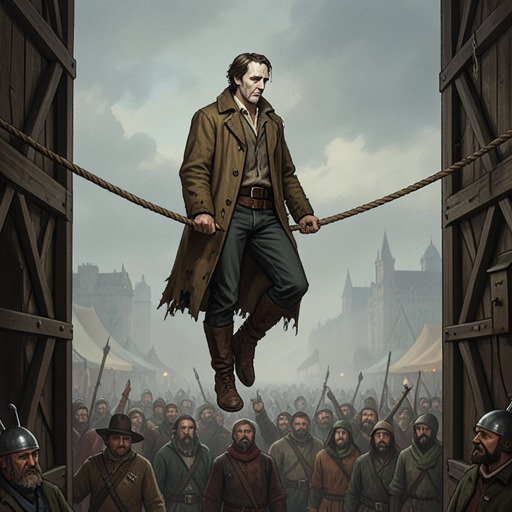
Zarathustra later gives the thought a scene at a gateway named Moment, where two eternal paths meet: one runs behind and one ahead. He asks whether all things, including the spider, moonlight, and those gathered at the gateway, must return. His speech grows quieter as he confronts the thought and his own reservations. Later, Zarathustra’s animals identify him as the teacher of Eternal recurrence and warn that teaching it is both his great destiny and his greatest danger and sickness. Set beside the rejection of Afterworlds, this episode shows what is at stake in dispensing with an imagined beyond: affirmation must face the return of earthly life itself, rather than depend on escape into another existence.